Making It Personal

SaaS is dying. AI will replace 50% of entry-level jobs in 5 years. “Something Big is Happening”. The drumbeat of posts and articles about AI taking away our jobs got a lot louder in the last couple of months. And they all come across the same way, stating AI is coming for your work, and you’re not ready.
Personally, I can’t stand messages like this. There’s already enough fear and anxiety in our world, do we need to fear the robots now too? What really gets me is how these articles treat AI as something that happens to you, like it’s something you don’t have any control over. I’m not dismissing that this is a massive shift in technology, one that’s going to bring massive change to how we do just about everything, but so did computers and telephones before that. What I believe is that we all have agency in how we approach this moment, and right now there’s an opportunity to build your own relationship with AI on your own terms, before someone else defines it for you.
This isn’t a zero-sum game you have to “get right.” It’s an opportunity to figure out how to approach AI in a way that works for you, and to give yourself permission to just mess around with it. Figuring out how to partner with AI is probably going to be even more important than learning to type was back in the 90’s, and most of us haven’t started figuring that out yet because there hasn’t been a good place to start.
The Blank Prompt
I remember when I first started hearing about ChatGPT back in 2023. People were having it write beat poetry like a pirate, asking it trivia questions, and making up silly stories and memes. We were playing with it because it was fun and kitschy and it felt like a novelty. But after the novelty wore off, I would open the app and just stare at it. A blank text box with a note underneath that says “AI can make mistakes. Double-check responses.” So, now what do I do?
And here we are in 2026 and that “now what?” moment is where a lot of people still are. Maybe you tried writing an email with it and didn’t like the tone, or used it to help you with a business question but it got a basic point wrong and you decided it wasn’t “intelligent” enough. Maybe you use it occasionally to search for something because it’s easier than Google, but that’s where you stop because it’s all you really need AI from in your life.
The problem is that AI doesn’t meet you halfway. It doesn’t know what you need or how you work, and it’s not going to figure that out on its own. That part requires you.
AI Is a Soft Skill
The “prompt engineering” courses, “100 best prompts” lists, and corporate AI training programs all teach AI like it’s a hard skill we all need to learn (like typing). If we learn the right prompts, master our inputs into the AI, we’ll get the result we want. And look, getting better at prompting really does help, but the thing that actually makes someone better at working with AI is more like a soft skill. Learning how to clearly define what you’re trying to do, spot the errors when the output isn’t right, and redirecting the AI when it’s not working, that’s all communication and judgment. While we might be good at interacting with humans this way, learning how to do it with AI takes practice, repetition, and failing constantly but quickly (trust me, I know).
If you look back through just recent history, that’s how we have learned every new technology. People didn’t figure out how to use the internet through corporate training. They learned by searching Yahoo! for sports scores, finding what others recommended for restaurants in a new city, emailing our friends to share exciting news. We started with personal use, and by the time your company needed you to “go digital” and use six different SaaS products to do your job, you’d already been living online for years. Smartphones were the same. Nobody took a course on “how to use your iPhone for productivity.” You downloaded apps that solved your problems on your phone (usually skirting IT policy) and figured it out yourself (or with a friend’s help).
But that comparison is incomplete with AI. We all figured out how to use Google by iterating our searches and changing our keywords, but we didn’t build a working “relationship” with Google. We didn’t need to. AI is different because it’s the first technology that works with you rather than just for you. Every previous tool did what you told it to do. AI responds, pushes back, gets things wrong in interesting ways, and adapts as you give it more to work with.
It makes me think about horseback riding. When I learned to ride a lot of my focus was on holding the reins correctly, using my voice with the reins to slow down, using my legs more subtly to ask him to move. After a while I began to understand that horseback riding is a conversation with me asking and the horse interpreting that ask and deciding to respond.
It’s similar with AI. You’re figuring out how to operate it but you also have to learn to collaborate with it.
Building Your Own Way In
Personal use is the right place to start with AI because it matters to you, but the risk is low if you get it wrong. At work, the stakes feel high, the feedback loops are slow, and experimenting could put you in a bind. Starting with your own stuff, you can iterate freely, but you still care enough about the outcome to pay attention to what’s working and what isn’t.
Everyone I know makes scrambled eggs differently (even in my own household). But that’s what’s great about eggs, there’s no right recipe. I developed my technique through repetition, adjustment, and personal taste. Sure someone showed me the basics, but I just kept making them until I found what I liked best. Getting good at AI works the same way. You’re developing your own approach to working with a tool that responds differently depending on how you use it. Some people will find their way in through meal planning, trip research, home projects, or building images in Nano Banana (go look it up, it’s great). The starting point doesn’t really matter. If the task is yours and you can recognize if the AI is giving you back a good result, you’ve got a great place to start.
And if you’ve ever started a project by talking it through first like I do (half-formed ideas, false starts, circling back, gradually figuring out what you’re actually trying to say) this process will feel very familiar. I find working with AI is that same messy, iterative conversation. The first output is never the final product. It’s a starting point for a back-and-forth that shapes the result through multiple rounds. Everyone’s focused on getting the input right (better prompts, fewer prompts, one-shot solutions) but what I keep finding is that the people who get good at working with AI are the ones who get good at the back-and-forth, because that’s where the thinking actually happens. You’re refining your understanding of what you’re trying to do while you refine the output, and through that process you develop the judgment that makes AI actually useful.
For me, writing was the thing that made this click. I wasn’t trying to “learn AI.” I was trying to get better at writing and publishing consistently. Working with AI on something I genuinely cared about (and something where I could evaluate the output, because I knew what good looked like for me) taught me more about how these tools work than any course or tutorial could have. And through that process, I started building something I didn’t expect: my own AI ecosystem. Over the last year I’ve evolved to the point I have context files that teach the AI how I write, editing workflows built around how I actually think through problems, and a much better understanding of where the AI genuinely helps and where I always need to check its work. That all came from doing the work on something I cared about and paying attention to what happened. That ecosystem is mine, and I wouldn’t expect anyone else to be able to use it quite the same way because of that.
Personal use builds more than just familiarity with AI. By engaging through your own projects you end up building your own context and judgment, and your workflows will automatically start to reflect that. The people who wait will eventually get handed a version someone else designed for them (an AI workflow optimized for their company’s priorities, built on someone else’s assumptions about how the work should go). It’s inevitable that AI will show up in your work, the difference is whether you had a hand in shaping it to fit you.
More from AI-Human Partnership

Who Owns It When the AI Is Wrong?
“When AI gives customers bad recommendations, who answers for it? Operational AI governance requires clear decision rights, outcome accountability, and context auditability.”

What 2026 Looks Like to Me
2026 is AI's reckoning year. LLM leaderboards miss the point — what matters is ROI, accountability, and designing human-AI workflows for real operational value.
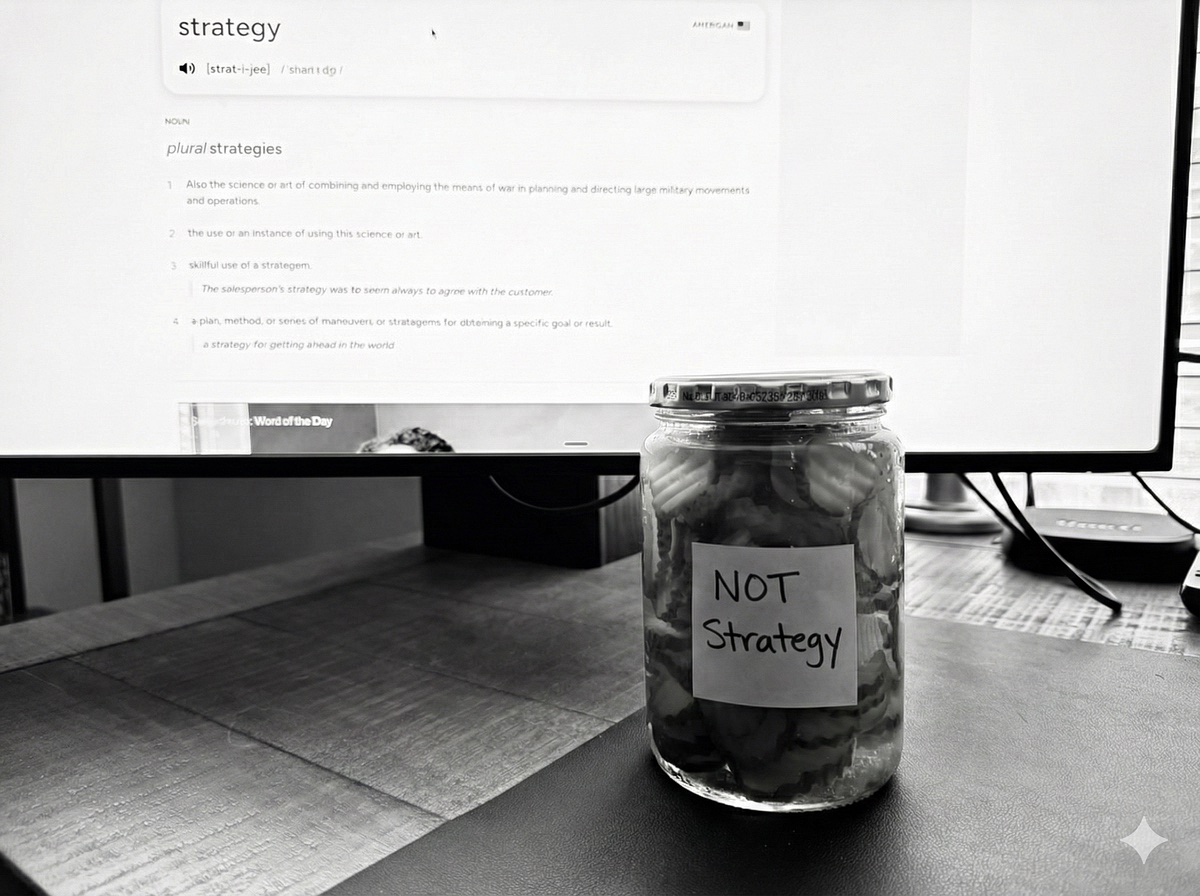
Pickles and Strategy: Why Collaborative Thinking with AI is Hard Work
AI pushes toward resolution even when questions deserve to stay open. Effective AI collaboration means learning to hold tension and resist premature answers on complex problems.